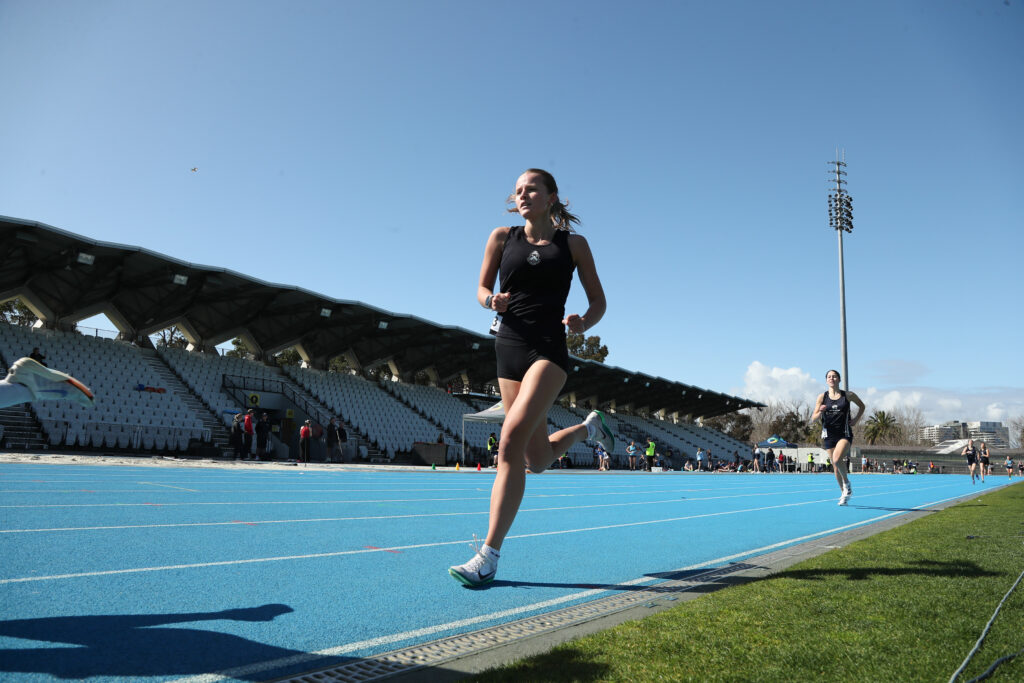
Speed is a crucial part of almost every sport. The faster you can move into position, the more opportunities you create whether that’s getting to the ball first, creating space, or beating an opponent.
Speed is a crucial part of almost every sport. The faster you can move into position, the more opportunities you create whether that’s getting to the ball first, creating space, or beating an opponent.
To improve speed effectively, it helps to understand that sprinting is made up of two key phases: acceleration and maximum velocity. Each phase has different demands and therefore requires slightly different training approaches (Francis 1997).
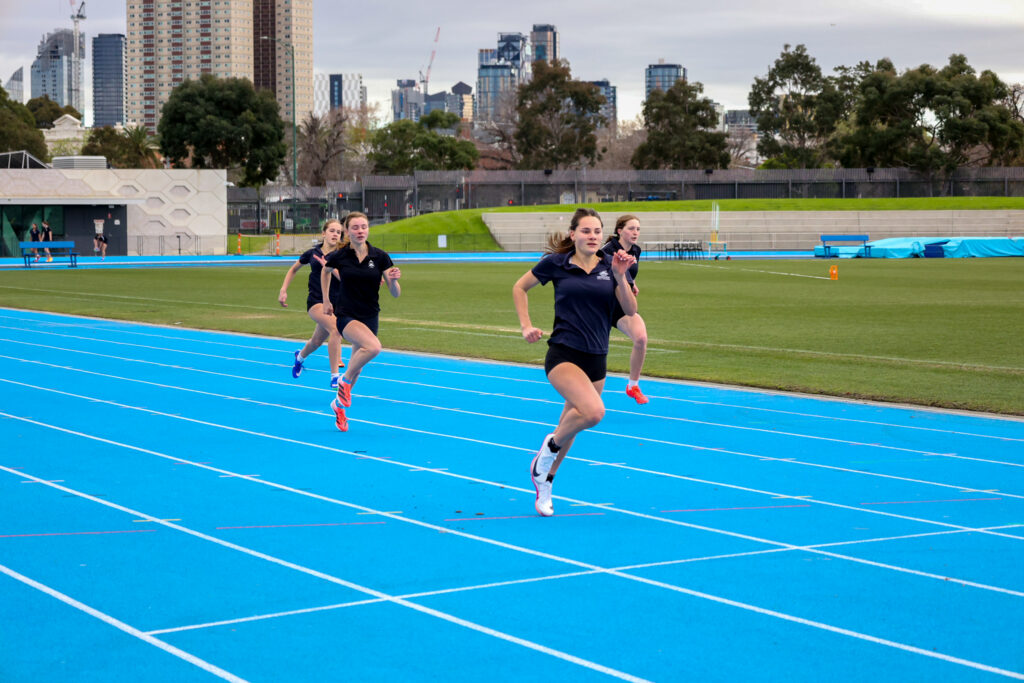
The first phase is acceleration, which typically occurs over the first 0–20 metres for most team sport athletes. This is where you build speed from a stationary or slow position. During acceleration, the goal is to project your body forward and apply as much force into the ground as possible in a short amount of time. This is often referred to as rate of force development.
Mechanically, athletes should focus on pushing horizontally rather than vertically. A strong forward lean and powerful steps help you “drive” out of the start rather than pop straight up. Physically, this phase relies heavily on the lower leg and posterior chain. Strong calves, particularly the soleus and gastrocnemius, play a key role in producing force quickly, while overall strength training improves your ability to generate power. Plyometric exercises such as bounding or depth jumps can further develop explosiveness and ground contact efficiency.
Here at MGGS we have implemented a jump and plyometric framework to develop force and challenge our students to move their body fast.

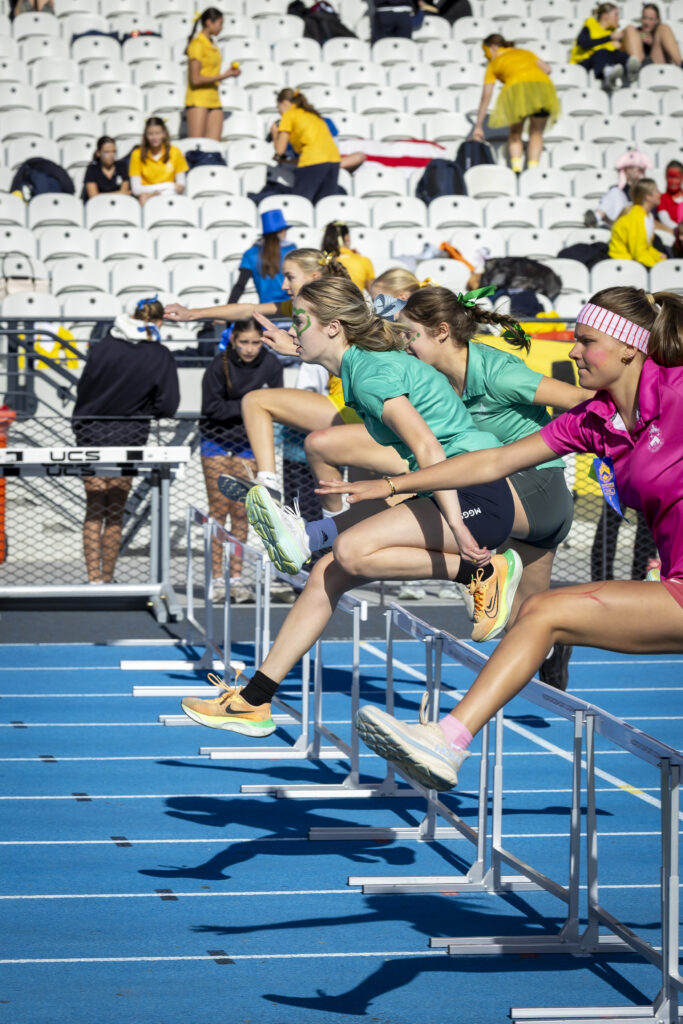
Once you have accelerated, you transition into the maximum velocity phase, usually between 20 and 50 metres depending on the sport and position. At this stage, sprinting becomes less about pushing and more about cycling the legs efficiently at high speed. Speed here is determined by stride length and stride frequency, and the aim is to optimise both without overstriding or losing rhythm.
The hips are particularly important during maximum velocity sprinting. Strong hip flexors help drive the leg forward quickly, while the glutes and hamstrings contribute to powerful hip extension and ground contact. Strength exercises such as squats, hip thrusts, and Romanian deadlifts build the foundation needed for this, while plyometric movements like bounding and box jumps enhance the ability to apply force rapidly.
Our Grammarians progress through our LTAD framework to improve technique whilst getting stronger in these movement patterns.
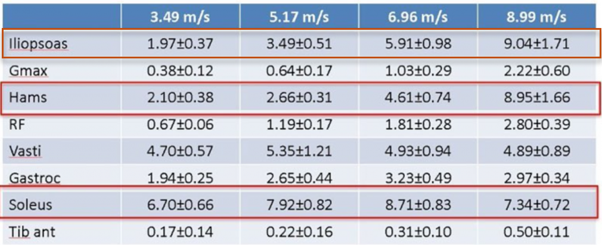
Strength training plays a central role across both phases. It is not only important for reducing injury risk but also for improving athletic performance. The stronger an athlete becomes relative to their bodyweight, the more force they can apply into the ground, which directly contributes to faster sprinting. Dorn’s study on peak muscle contribution has highlighted the importance of muscles such as the soleus, iliopsoas, and hamstrings in producing the forces required for high-speed running (Dorn et al 2012).
However, it is important to remember that sprinting itself is a skill. Just like any other skill, it requires regular practice. Including sprint training once or twice per week allows athletes to develop technique, coordination, and efficiency at speed.
A simple session might include a thorough warm-up, followed by short acceleration sprints over 5–20 metres, then longer efforts of 40-60 metres to target maximum velocity, with full recovery between each sprint to maintain quality. Plyometrics and strength training can then be added to support development.
|
Aim |
Distance |
Reps |
Rest |
Total session distance |
|
Acceleration |
5-30m |
4-10 |
1min for every 10m ran |
100-150 |
|
Max Velocity |
10-30m (excluding acceleration distance) |
3-8 |
1min for every 10m ran |
50-150 |
Haugen et al (2019) Example Session
Improving speed comes down to developing strength in key muscle groups, training both phases of sprinting, and consistently practising the skill of running fast.
At MGGS this is achieved through our athletics program and during the physical development of our champion sports.
References
Francis, C. (1997). Training for speed. Faccioni Speed and Conditioning Consultant. ISBN: 978-0646328522
Dorn, T. W., Schache, A. G., & Pandy, M. G. (2012). Muscular strategy shift in human running: dependence of running speed on hip and ankle muscle performance. The Journal of experimental biology, 215(Pt 11), 1944–1956. https://doi.org/10.1242/jeb.064527
Haugen, T., Seiler, S., Sandbakk, Ø., & Tønnessen, E. (2019). The Training and Development of Elite Sprint Performance: an Integration of Scientific and Best Practice Literature. Sports medicine – open, 5(1), 44. https://doi.org/10.1186/s40798-019-0221-0