However, decades of research have substantially advanced our understanding. Organisations such as the World Health Organisation, the Australian Institute of Sport (AIS) and the Australian Strength and Conditioning Association recognise appropriately supervised resistance training as a safe and highly beneficial activity for young people.
The question is no longer whether girls should participate in strength training, but how we can help them do it safely, effectively and enjoyably. Importantly, youth resistance training is not about lifting the heaviest weight possible or building large muscles. It is about developing strength, learning movement skills, improving coordination and building confidence.
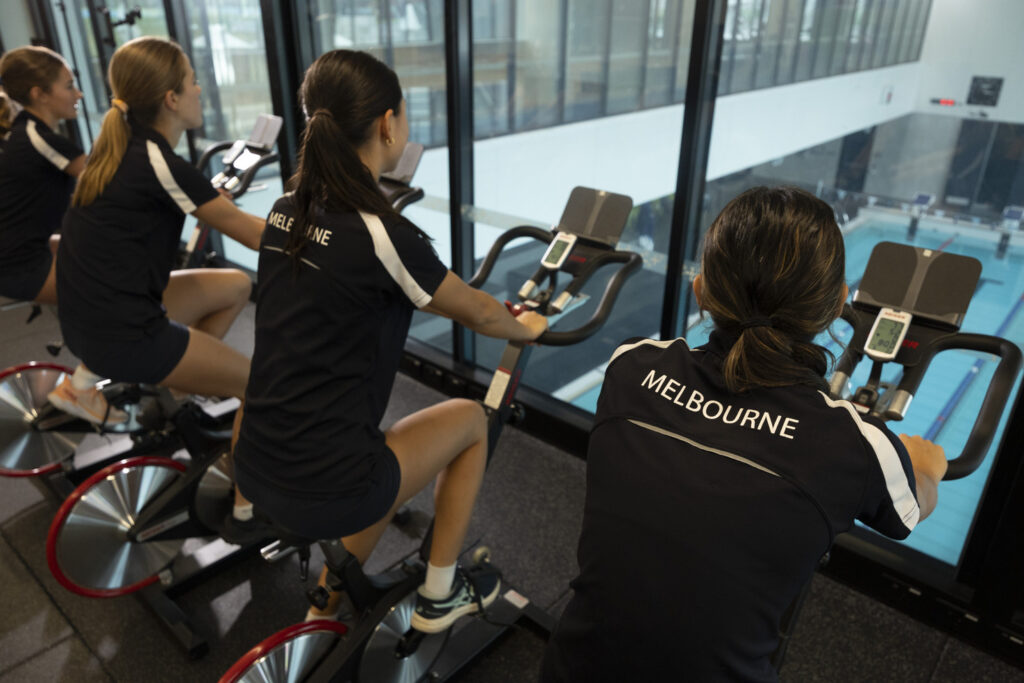
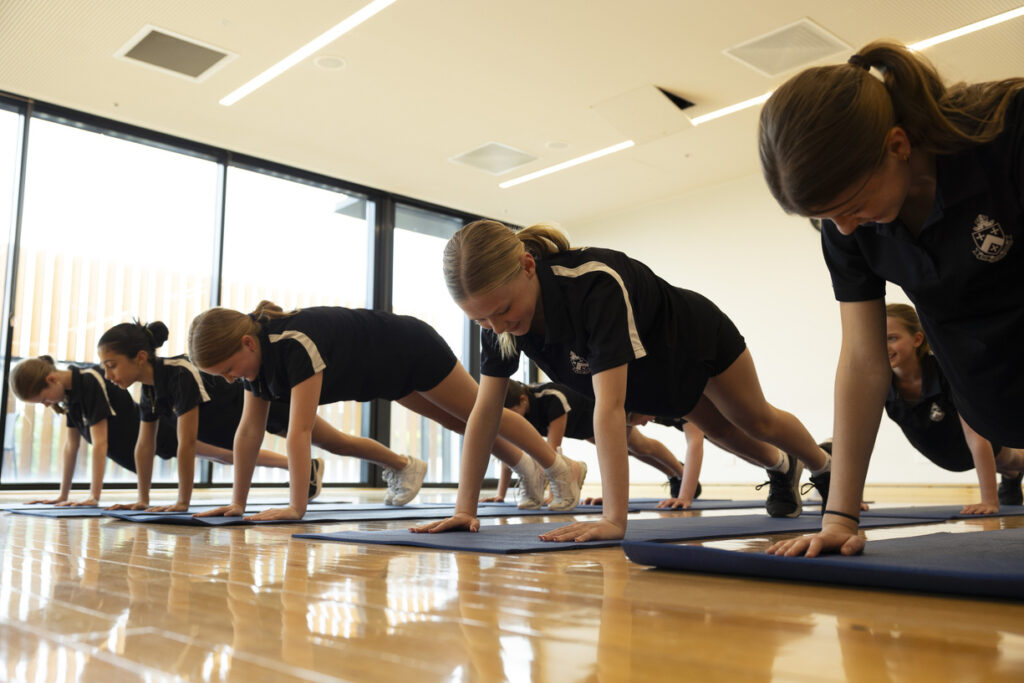
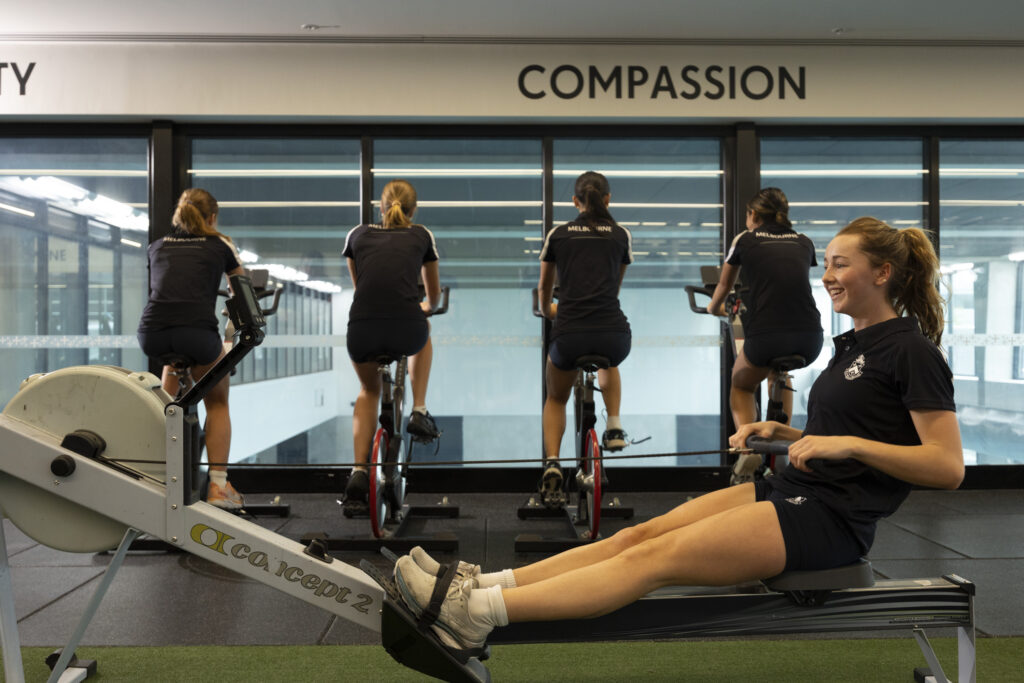
For our young Grammarians at MGGS, sessions may include bodyweight exercises, resistance bands, medicine balls, free weights, barbells and jumping and landing activities. These are introduced progressively and under appropriate supervision.
What happens when we introduce appropriately designed resistance training?
Adolescence is a period of rapid physical change. Bones are growing, muscles are developing and coordination is constantly adapting. This creates a valuable opportunity to build physical foundations that support both sport and everyday life. Research consistently shows that young females can improve strength, power, balance, coordination and overall movement skills through structured resistance-training programs.
These qualities don’t just help on the sporting field. They make everyday movement easier, help girls feel more capable in their bodies and allow them to participate in physical activity with greater confidence. When young people feel competent in their movement, they are more likely to remain active and engaged in physical activity throughout adolescence and beyond.
Stronger Bones = Great Resilience
One of the most important benefits of resistance training has little to do with sporting performance. It is about building a healthier body for life. During adolescence, much of a person’s lifelong bone density is established, making these years a critical window for bone development. Activities such as jumping, landing and resistance training place healthy stress on bones, encouraging them to become stronger.
Strength training also helps reduce injury risk. By strengthening the muscles surrounding the hips, knees and ankles, girls improve their ability to control movement, absorb force and maintain stability. Rather than simply reacting to movement, they become better equipped to manage it. Research shows that well-designed strength-training programs can improve movement quality and physical resilience, helping girls stay active and participate in the activities they enjoy with fewer interruptions from injury.
Building confidence that extends beyond the gym.
While the physical benefits of strength training are impressive, some of the most meaningful outcomes are psychological. As coaches, we often witness small moments that carry enormous significance for a young person. It might be completing a first full push-up, mastering a squat technique or lifting a weight that once seemed impossible.
These achievements create a genuine sense of accomplishment because progress is visible, measurable and earned. This is particularly important during adolescence, a time when participation in physical activity often begins to decline. Feelings of self-consciousness, low confidence or a belief that they are “not sporty” can discourage girls from remaining involved in sport and exercise.
Strength training can help change that narrative.
When girls experience success in the gym, they begin focusing less on what their bodies look like and more on what their bodies can do.
They learn that new skills can be developed, challenges can be overcome and strength can be built through consistent effort. The confidence gained through this process often extends well beyond training sessions. It can transfer to sport, school and other areas of life.
Perhaps one of the greatest lessons I have watched our students learn and ultimately carry with them beyond our red brick walls is that strength is not something you are born with, but something that can be developed through practice, patience and persistence.