“Why do netballers need to do strength training?”
It is a great question and one we often hear from young athletes.
“Why do netballers need to do strength training?”
It is a great question and one we often hear from young athletes.
Netball is a fast and physically demanding sport. Players are constantly required to accelerate, stop, change direction, jump, land, contest space, pass under pressure and make quick decisions. Strength training helps prepare their bodies for these demands (Whitehead et al., 2021).
At Melbourne Girls Grammar and through Artemis Programs, our goal is to support students to become strong, confident and capable athletes who develop positive movement and training habits that extend beyond school sport.

We aim to build the physical foundations, skills and confidence that allow students to participate fully in their current sporting experiences while supporting their continued development into the future. This approach aligns with long-term athletic development principles, which emphasise building physical competence and creating positive training experiences throughout childhood and adolescence (Lloyd et al., 2016).
Why Strength Training Matters
Strength training provides young netballers with a foundation to move more effectively.
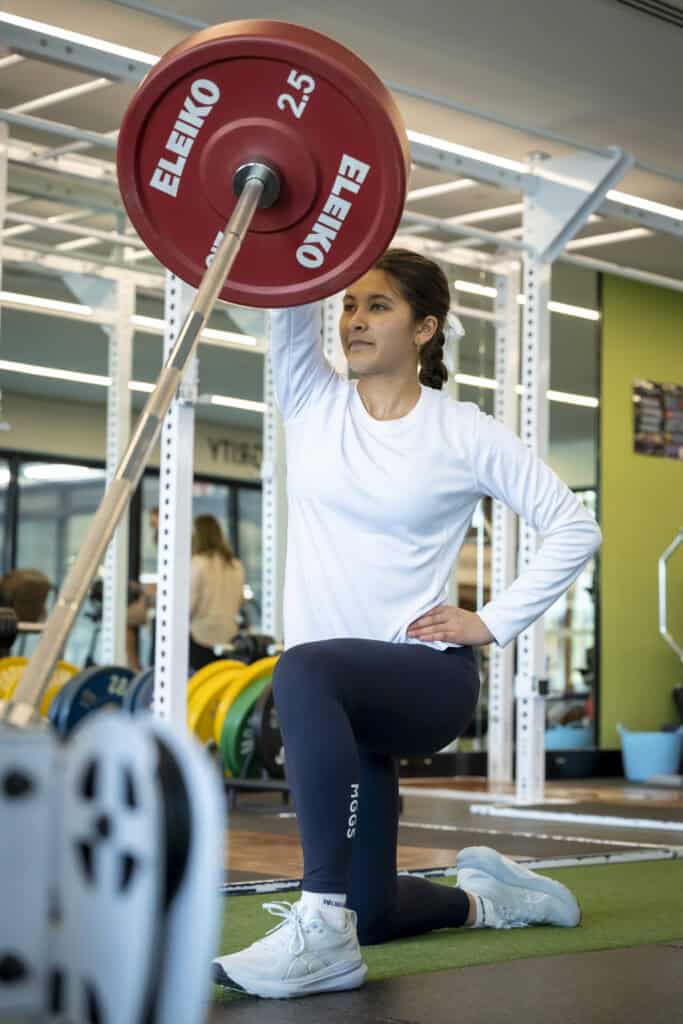
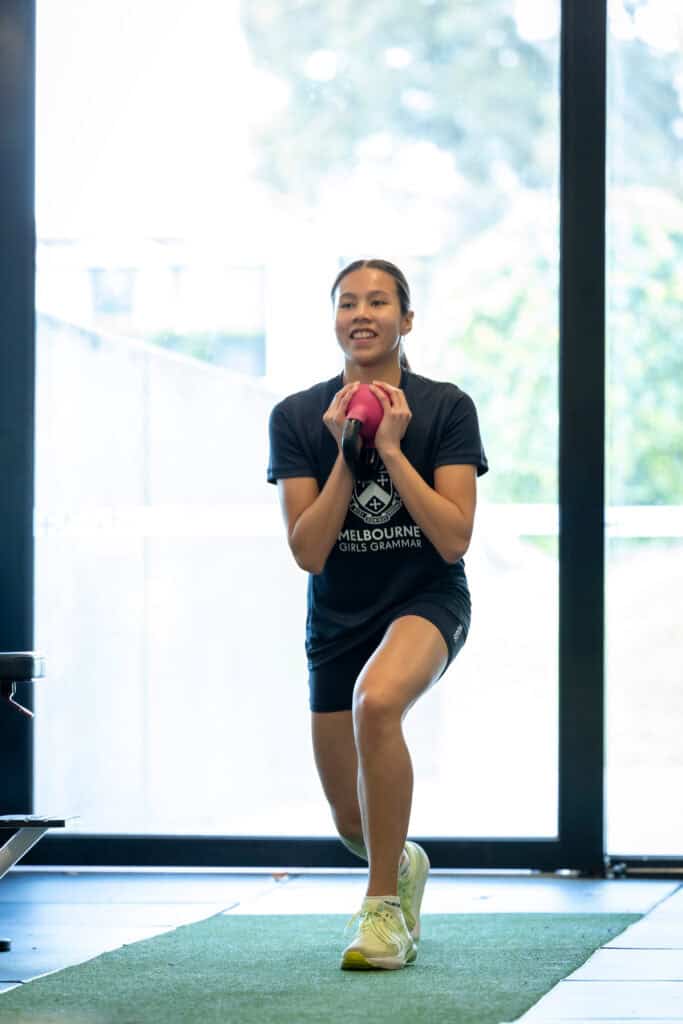
Lower-body strength supports acceleration, jumping, landing, and change of direction. Trunk strength helps players maintain strong positions and transfer force when passing or receiving the ball. Upper-body strength supports throwing, catching, and managing physical pressure.
Strength also helps athletes absorb force when stopping or landing. This is particularly important in netball, where players regularly land in crowded and unpredictable situations (Whitehead et al., 2021).
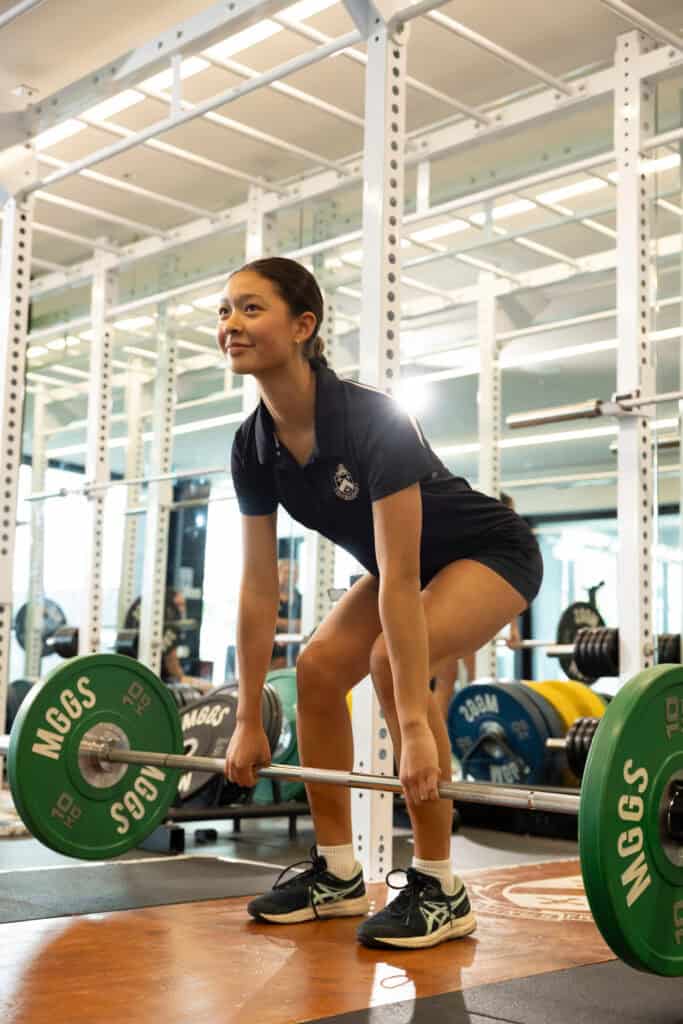
For our Year 8 to 12 netballers, strength training is purposeful, progressive and age appropriate. Athletes develop the strength, movement quality and confidence required to perform key movement patterns safely and effectively, including squatting, hinging, pushing, pulling, lunging, bracing, jumping and landing. The emphasis is on building sound technique and strong physical foundations that can support both current performance and long-term athletic development.
The Australian Strength and Conditioning Association supports resistance training for children and adolescents when it is appropriately supervised, technically focused and matched to the athlete’s stage of development and physical competency (Australian Strength and Conditioning Association, 2007).
In our programs, students must first demonstrate good movement quality before exercises become more difficult or additional load is introduced.
Developing Confidence and Resilience
Many young athletes are still learning how to coordinate and control their bodies, particularly during periods of growth.
A supportive training environment allows students to practice new skills, make mistakes, receive feedback, and experience improvement. When an athlete learns a new exercise, improves their landing technique, or feels stronger on court, they begin to trust their body.
Resilience develops in a similar way. Progress is rarely immediate. Athletes experience difficult sessions, fatigue, mistakes and a selection of challenges. Training teaches them that improvement comes through patience, effort, and consistency.
While appropriate strength, landing, balance and mobility work can support safer movement, our goal is broader than injury prevention. We want students to become robust, capable, and empowered athletes who understand that their bodies are adaptable, trainable, and strong.
Developing strong, confident and resilient netballers is about more than performance. It is about giving young athletes the tools to move well, manage challenges and build habits that support them both on and off the netball court.
References
Australian Strength and Conditioning Association. (2007). Resistance training for children and youth: A position stand from the Australian Strength and Conditioning Association. Journal of Australian Strength and Conditioning, 16(1), 35–42.
Lloyd, R. S., et al. (2014). Position statement on youth resistance training: The 2014 International Consensus. British Journal of Sports Medicine, 48(7), 498–505.
Lloyd, R. S., et al. (2016). National Strength and Conditioning Association position statement on long-term athletic development. Journal of Strength and Conditioning Research, 30(6), 1491–1509.
Whitehead, S., Weakley, J., Cormack, S., Alfano, H., Kerss, J., Mooney, M., & Jones, B. (2021). The applied sports science and medicine of netball: A systematic scoping review. Sports Medicine, 51, 1715–1731.